Creating My Own Reading Journal
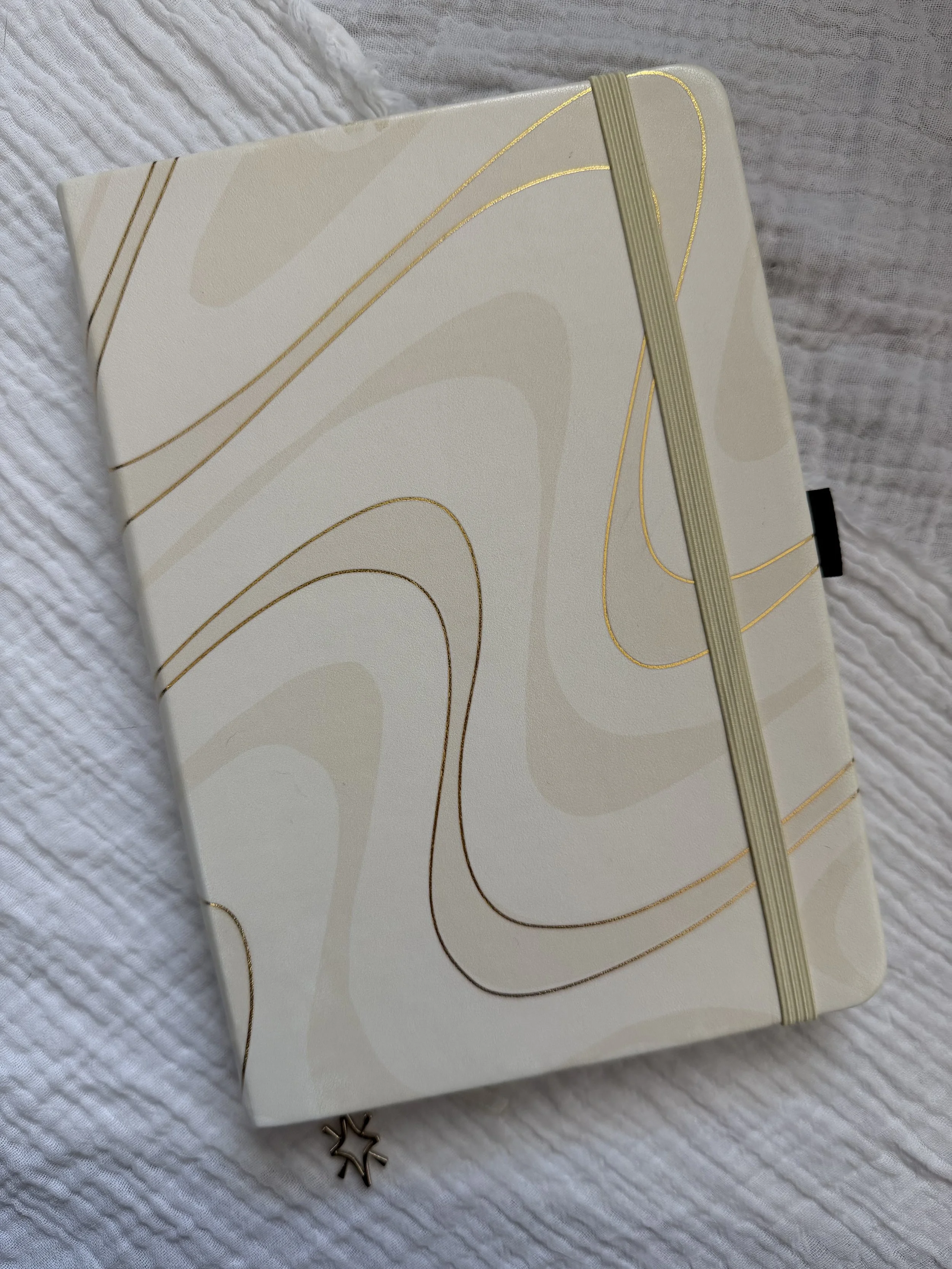
One of my favorite bookish projects this year was creating my own reading journal for 2026 from scratch. I wanted something gave me room to track, reflect, and have a little fun along the way. Instead of buying a pre-made reading journal, I decided to design my own inside a 160-page dot grid journal from Shop ARL.
Here’s a full walk through of how I set it up:
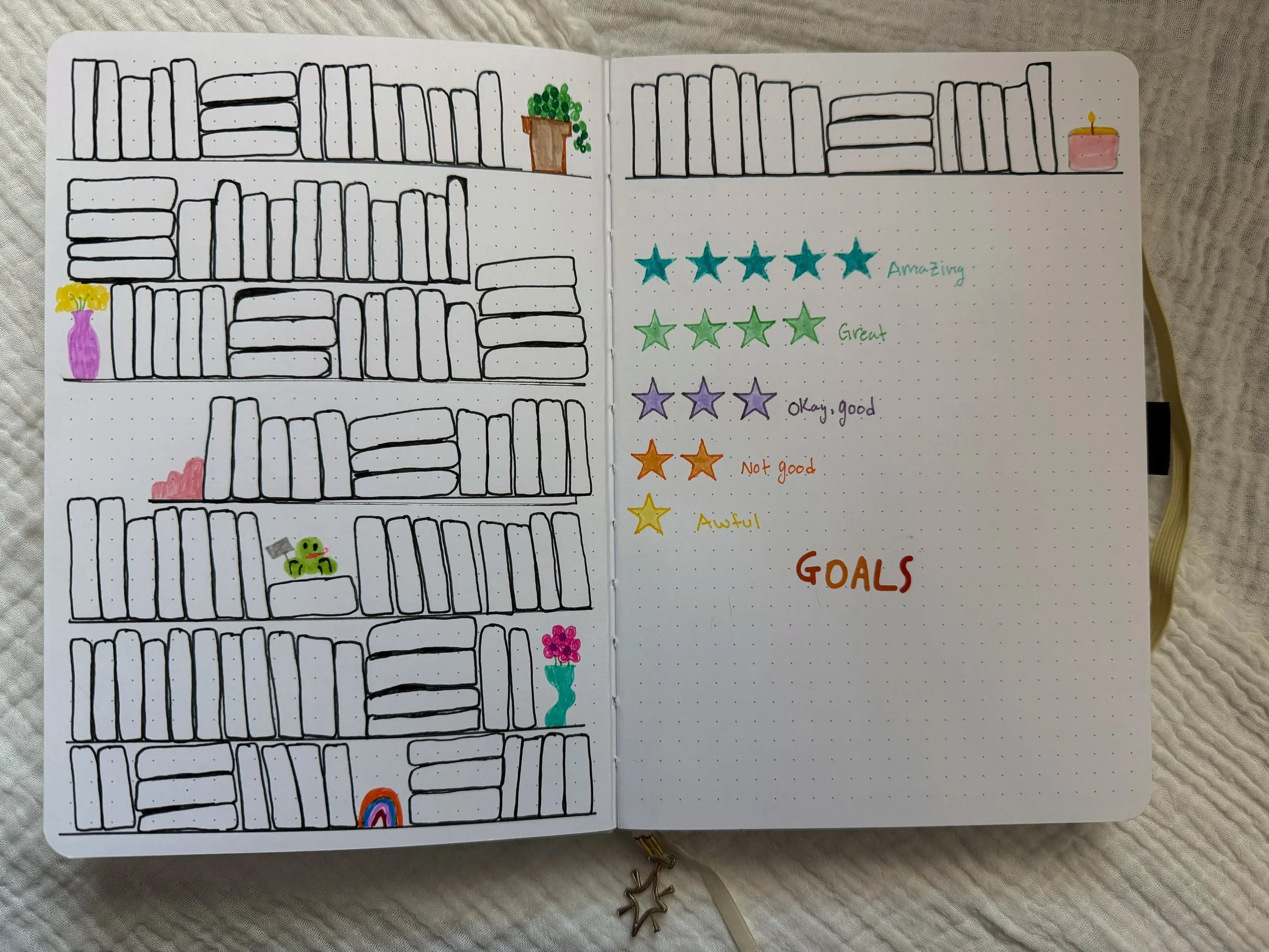
The Opening Pages:
My Bookshelf (Up to 125 Reads)
The very first two pages are a hand drawn bookshelf where I can write in every book I read this year, up to 125 total. I love having a visual representation right at the beginning; it’s incredibly motivating to see the shelves slowly fill up over time.
Star Ratings & Reading Goals
Alongside the bookshelf, I included space for my star rating key and my reading goals for the year. This keeps my intentions front and center and helps me remember why I’m tracking my reading, not just the numbers.
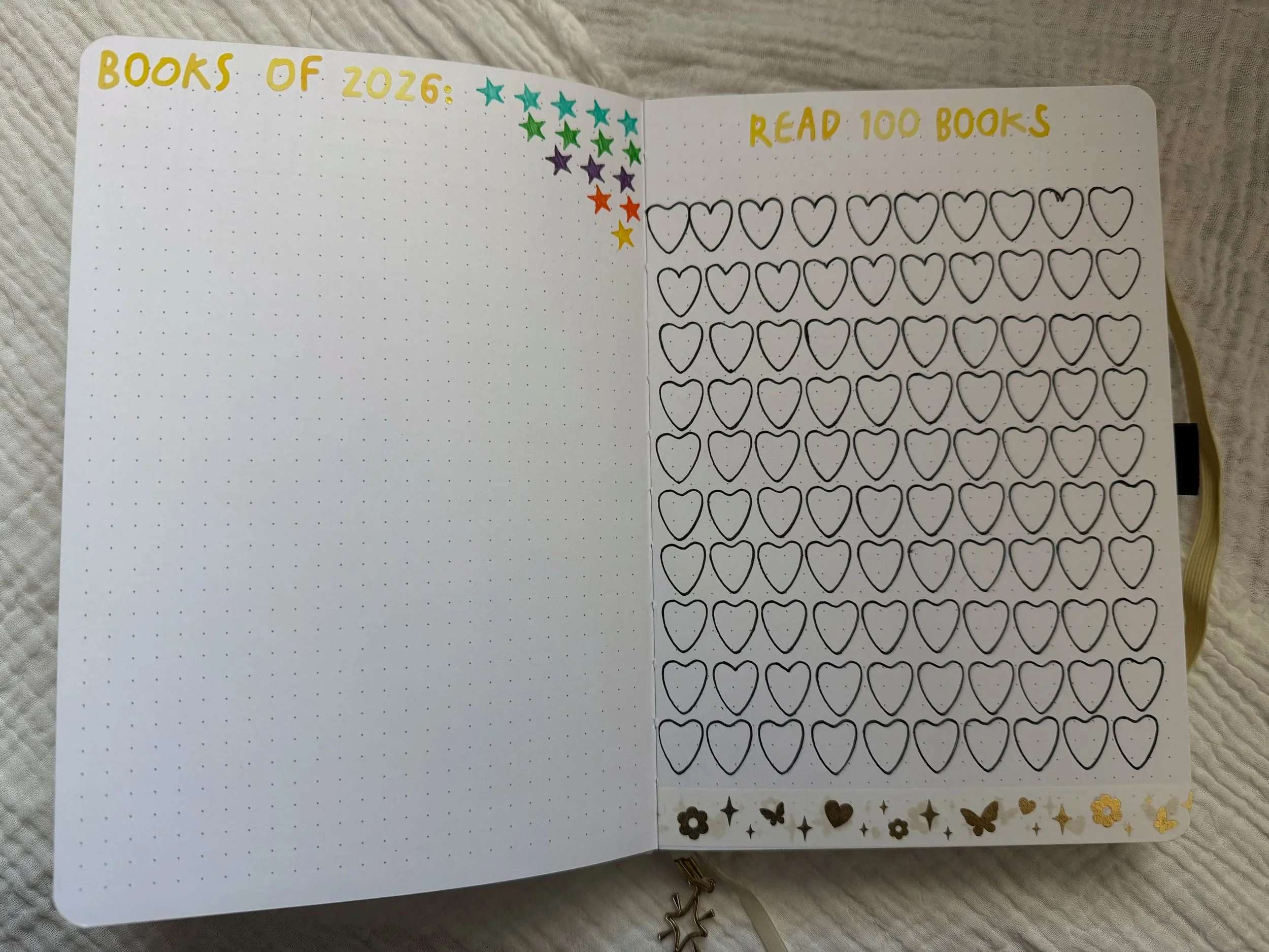
Reading Log + The 100-Heart Challenge
The next two pages are dedicated to a full reading log, every book I read gets listed here in order. Right next to it is one of my favorite features: 100 little hearts.
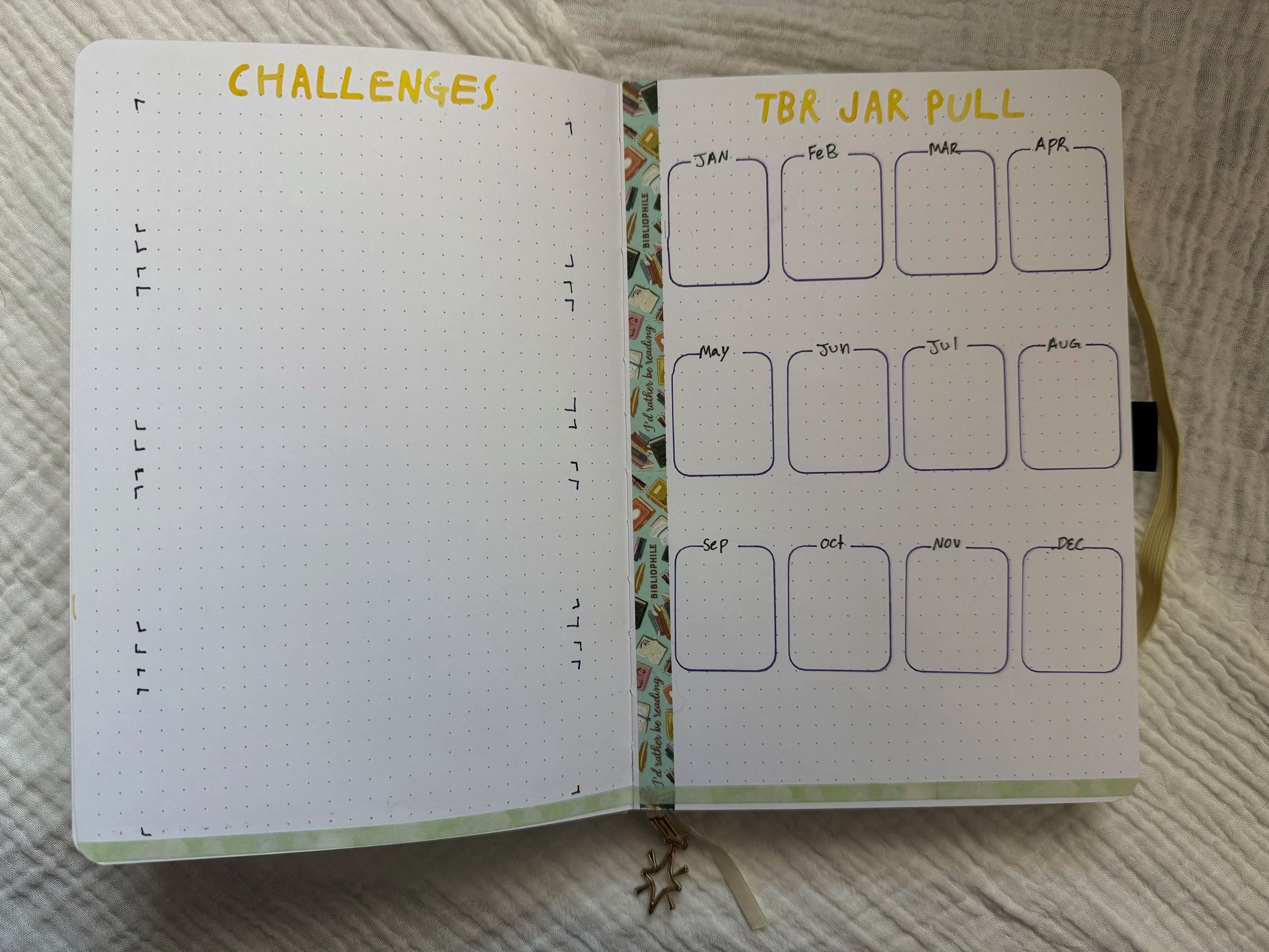
Bookmark Challenges
I love giving myself small, manageable challenges, so I added a section for my quarterly bookmark challenges. These are mini reading challenges I set every three months, and having them written down keeps me accountable without feeling overwhelming.
TBR Jar Pulls
Next is my TBR jar pull page, where I write down the book I pull from my jar each month. This keeps my TBR exciting and also helps me to read books that I normally wouldn’t or that have been sitting on my shelf for too long.
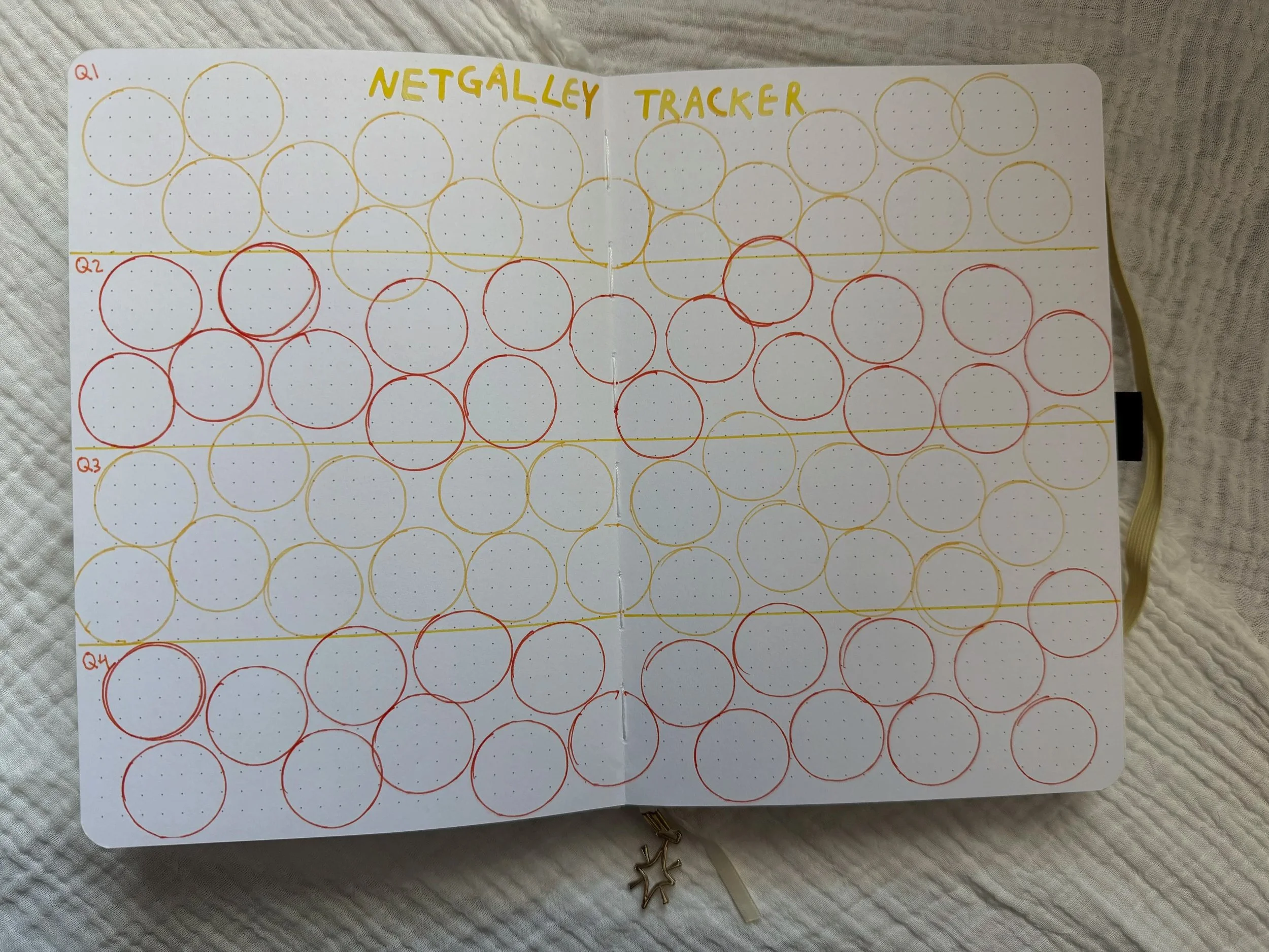
NetGalley Tracker (Quarterly)
As a NetGalley reader, I needed a system that actually worked. I created a NetGalley tracker divided into four sections, one for each quarter of the year. This helps me stay on top of approvals, deadlines, and reviews without everything blurring together.
Monthly Spreads:
Each month follows the same structured layout, which makes the journal feel cohesive and easy to use.
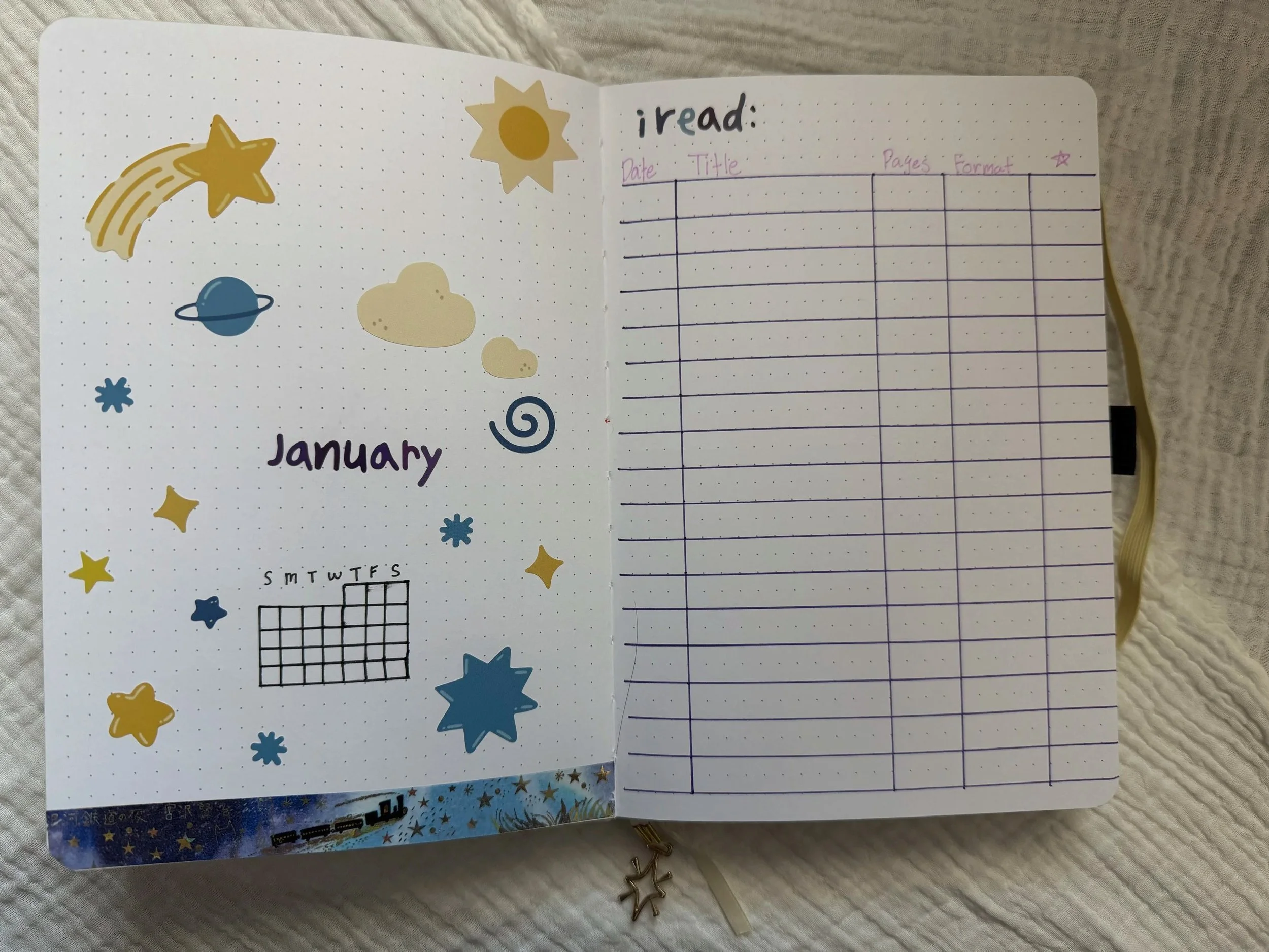
Monthly Title Page + Calendar
Every month starts with a title page and a small calendar overview, giving me a quick snapshot of what’s ahead.
Monthly Reading Log
Next, I have space to write:
The date I finished each book
The title
The Pages
The format (physical, ebook, audiobook)
The Rating
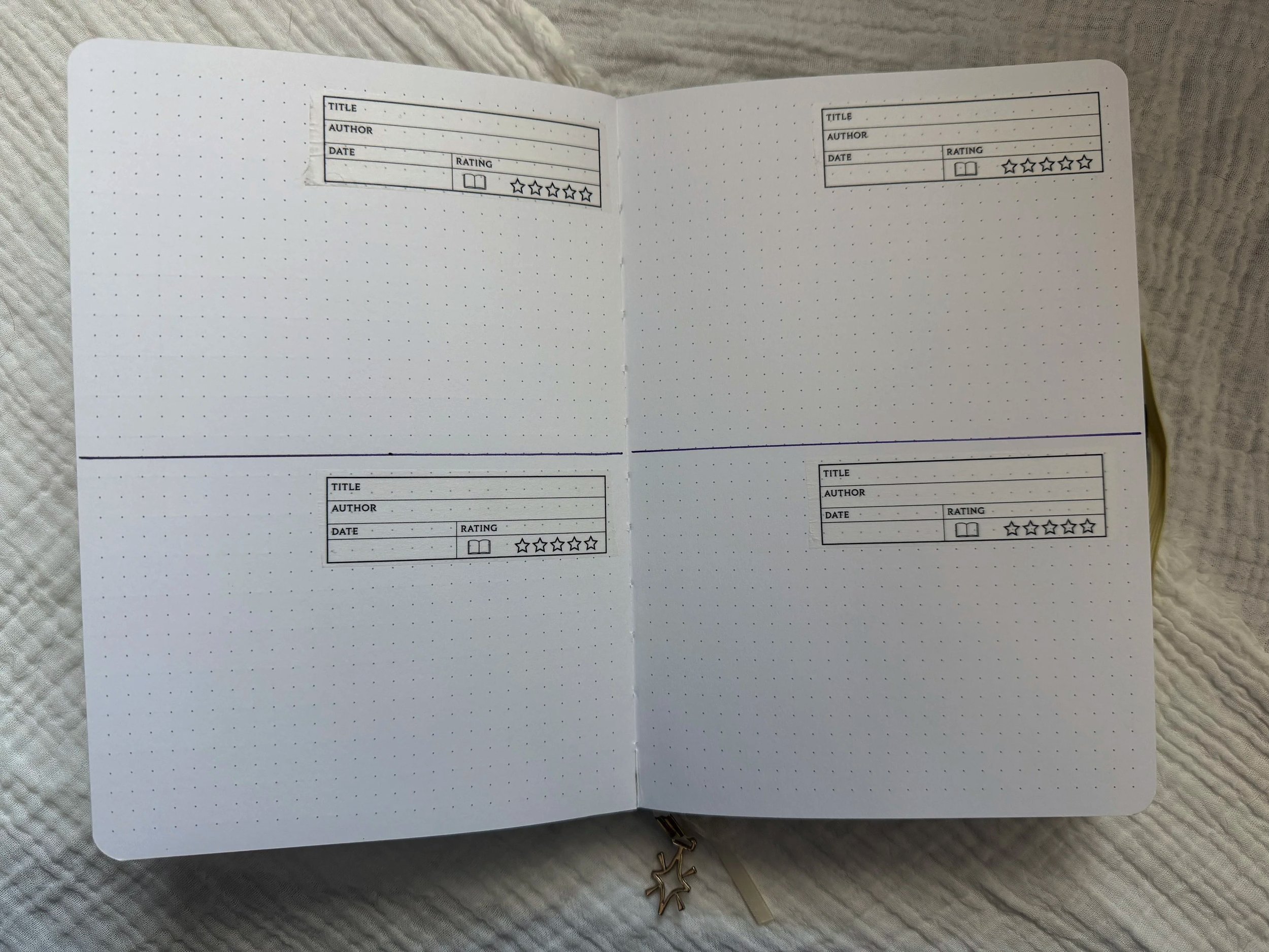
17 Individual Review Spots
Each month includes 17 individual review spaces, giving me room to jot down thoughts, ratings. I push myself to write a review for every book I read, and it has really helped my book recall, organzing my book feelings, and also feeling more connected to my reads. These are all 1/2 a page to keep things from getting too overwhelming, but having enough space for a picture of the book, the details and my review.
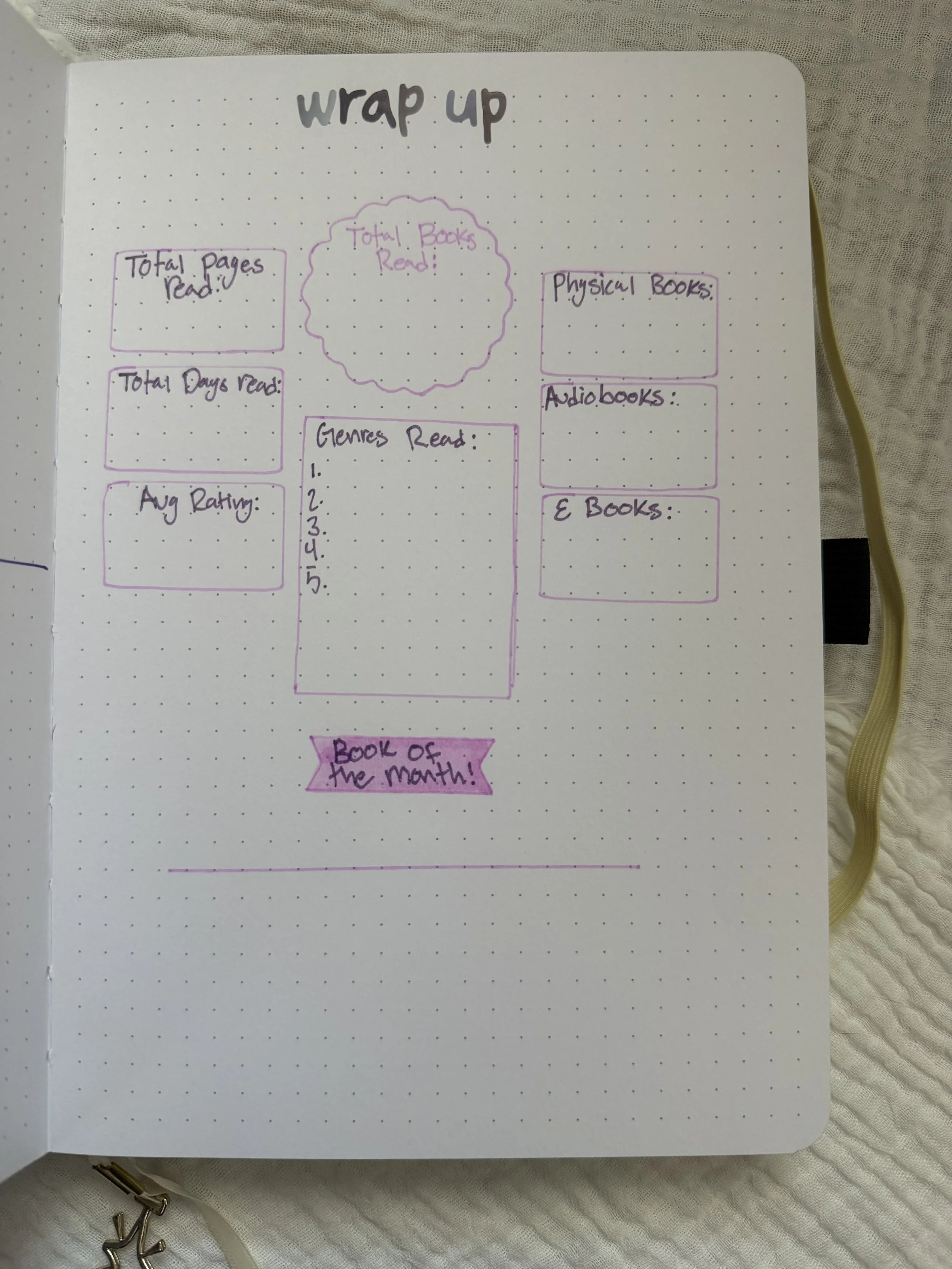
Monthly Wrap-Up
Each month ends with a wrap-up page, where I reflect on favorites and keep track of my stats for the month.
End-of-Year Pages
After 12 months of spreads, the journal closes with several reflective and fun end-of-year sections:
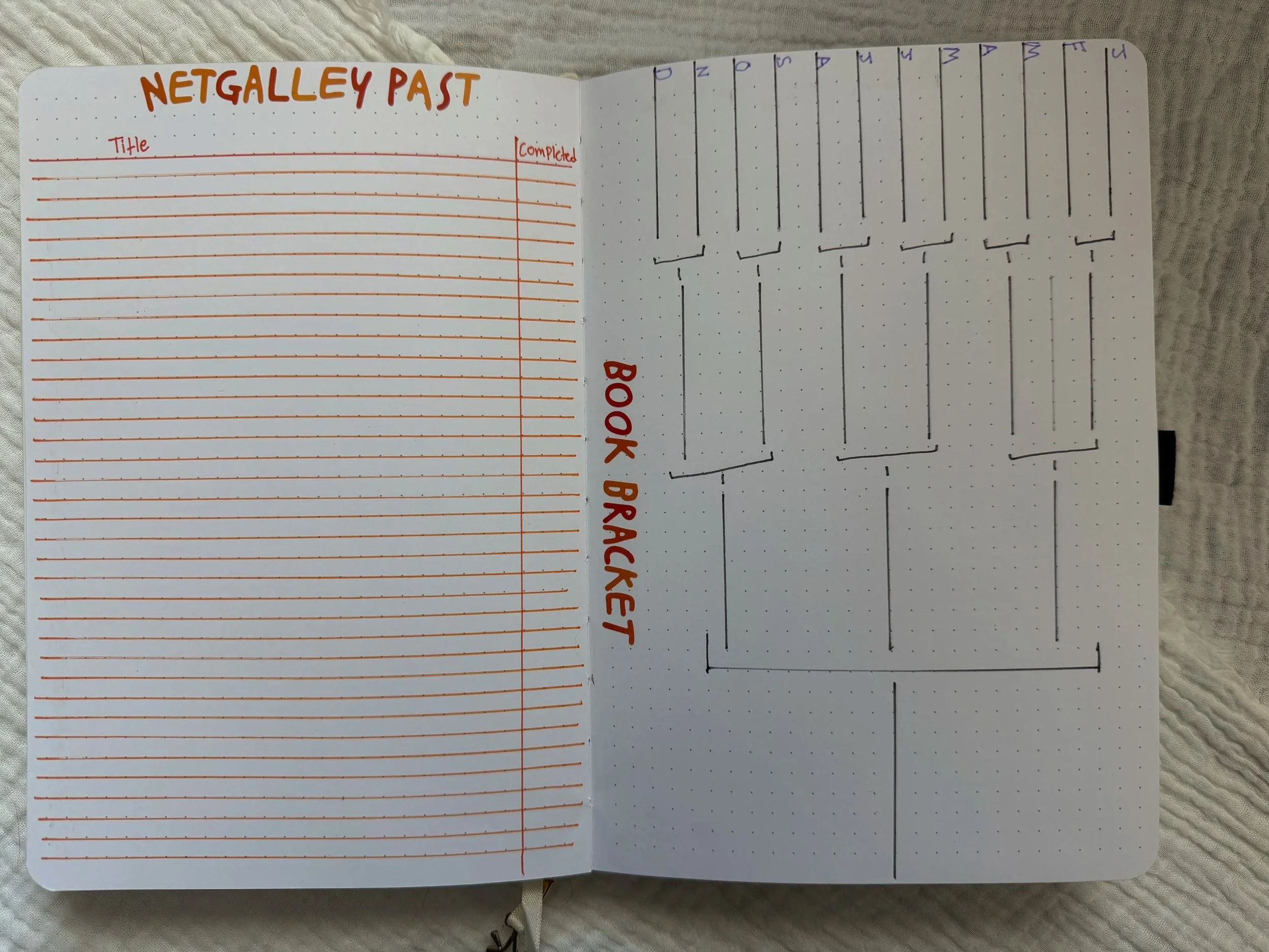
A page for NetGalley reads I’m behind on. This page will be filled with 2025 arcs I did not get to.
A Book of the Year bracket where I will put each book of the month and have them battle it out for best of the year.
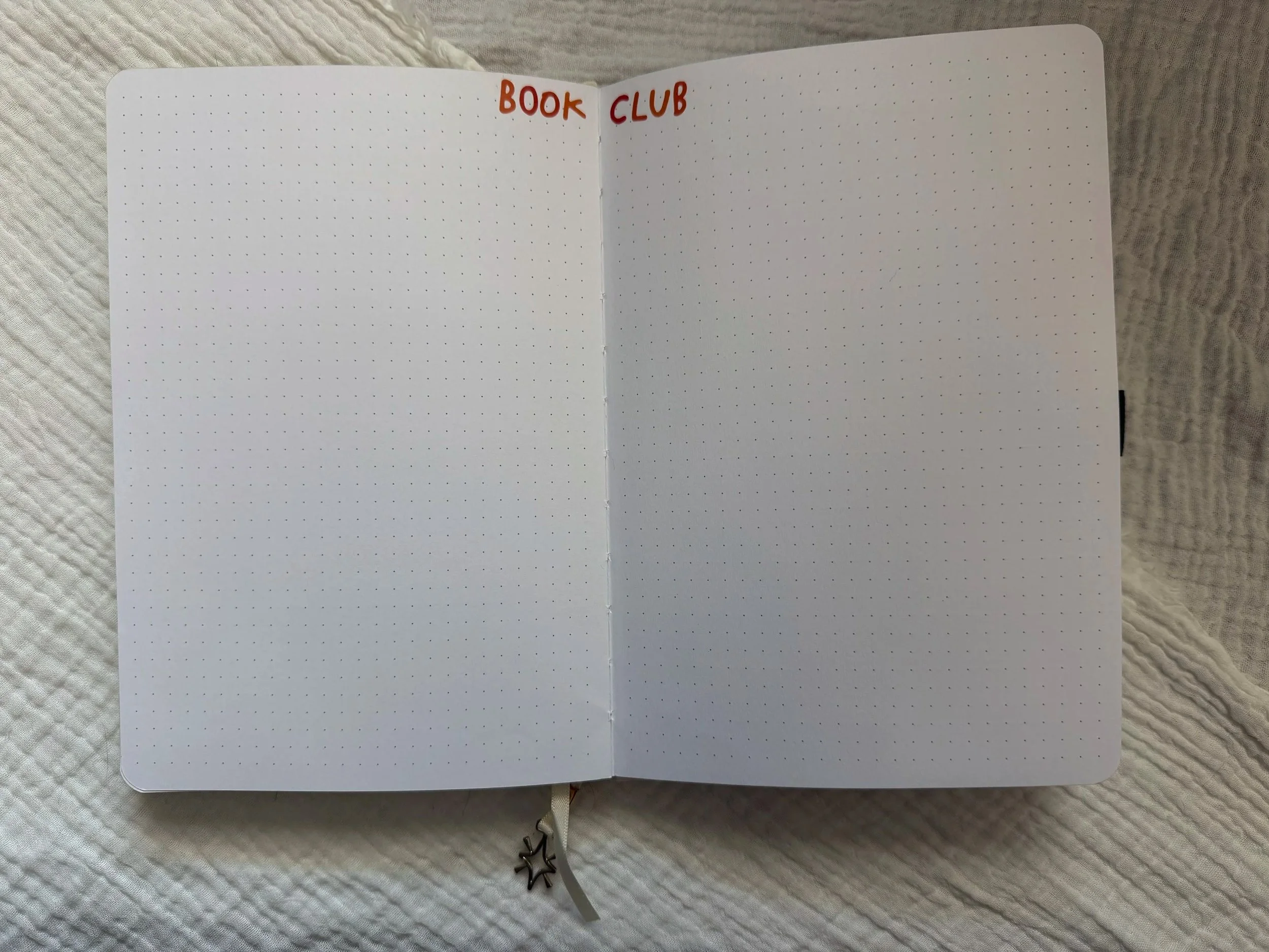
A reflection page for book club picks and discussions
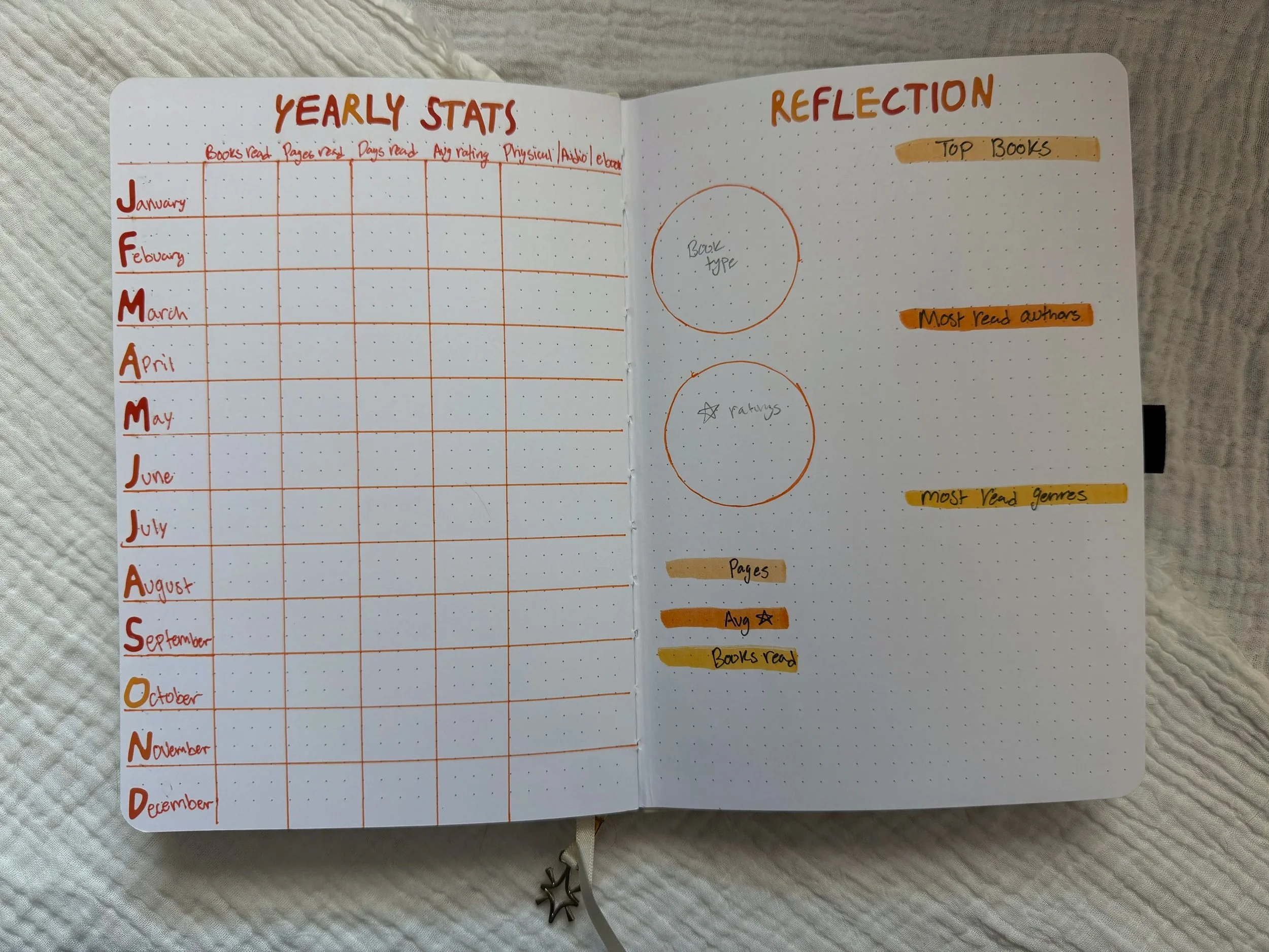
Yearly stats, including totals, formats, ratings, and trends
A final yearly wrap-up to reflect on how the year of reading felt as a whole
Final Thoughts
Designing my own reading journal took time, planning, and a lot of erasing, but it was 100% worth it. Every page serves a purpose, and the journal truly feels like mine. If you’ve ever felt like pre-made reading journals don’t quite fit your reading life, I can’t recommend creating your own enough. I already know this is something I’ll want to recreate (and maybe tweak) again next year.
If you’re thinking about making your own reading journal, let this be your sign to try it.